*This article is for informational purposes only and does not constitute veterinary advice. Always consult your veterinarian regarding your dog's specific health needs.
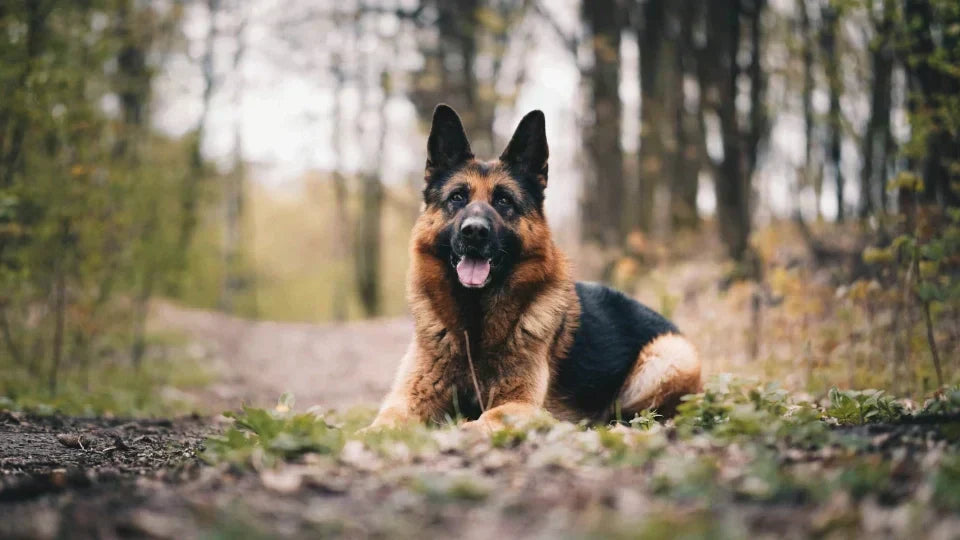
German Shepherds are one of the most popular dog breeds worldwide, and for good reason — they are intelligent, loyal, athletic, and deeply bonded to their families. They are also a large breed with a lifespan that is somewhat shorter than the average for all dogs, which makes understanding how they age — and what changes to watch for — genuinely valuable knowledge for any GSD owner.
This guide covers the German Shepherd lifespan from puppyhood through the senior years, with a particular focus on mobility-related changes and the practical steps owners can take at every stage to support their dog's long-term wellbeing.
German Shepherd Lifespan: The Numbers
The typical German Shepherd lifespan ranges from 9 to 13 years, with most studies placing the average around 10 to 11 years.
The American Kennel Club (AKC) officially lists the German Shepherd lifespan at 7 to 10 years, which reflects the conservative end of the range. Multiple independent studies have found averages closer to 10 to 11 years for well-cared-for dogs. Female German Shepherds tend to live approximately 1.4 years longer than males — with females averaging around 11.1 years and males around 9.7 years.
|
Metric |
Value |
|
AKC listed range |
7–10 years |
|
Typical range (multiple studies) |
9–13 years |
|
Female average |
~11.1 years |
|
Male average |
~9.7 years |
|
Senior stage begins |
Around age 7–8 |
These are averages across large populations. Individual lifespans are influenced by genetics, diet, exercise, weight management, and access to veterinary care. Well-cared-for German Shepherds regularly live into their early teens, and some reach 14 to 15 years.
Life Stages: What to Expect at Each Phase
Puppy (0–18 months)
German Shepherd puppies grow rapidly — from a few kilograms at birth to 30–40 kg by 12 to 18 months. This fast growth rate places significant demands on developing bones and joints, which is why the puppy stage is one of the most important periods for building good habits that support long-term mobility.
Practical considerations:
- Feed a diet formulated specifically for large breed puppies — these are designed to support controlled, steady growth rather than rapid weight gain
- Limit high-impact exercise during the first 12 to 18 months. Short walks on soft ground are preferable to long runs on hard surfaces
- Avoid repeated stair climbing and jumping from height (car boots, beds, furniture) while bones and joints are still developing
- Socialisation and light activity are important — the goal is appropriate movement, not restriction
Young Adult (18 months – 3 years)
The young adult German Shepherd is typically at peak physical condition — strong, athletic, and built for sustained activity. This is the stage where regular exercise habits become established, and where weight management starts to matter.
German Shepherds are an active breed that benefits from substantial daily exercise — typically 1 to 2 hours — across a mix of walking, running, and mentally stimulating activity like obedience work, scent games, or structured play.
Practical considerations:
- Establish a consistent exercise routine that includes both physical and mental stimulation
- Monitor weight closely. German Shepherds are predisposed to carrying excess weight, which places additional load on their joints throughout life
- Begin annual veterinary check-ups that include a general assessment of gait and joint health
Mature Adult (4–7 years)
The mature adult phase is where many German Shepherds settle into their most stable period — experienced, well-trained, and reliably active. For most dogs, this is a healthy and enjoyable stage of life.
Beneath the surface, however, this is the period when age-related joint changes may begin developing — often without visible symptoms. This is precisely why routine veterinary monitoring during the mature adult years is so valuable: early detection of any changes gives owners and veterinarians the most options for proactive management.
Practical considerations:
- Continue regular exercise, adjusting intensity if your dog begins to show any signs of stiffness after activity
- Maintain a healthy weight — this becomes increasingly important from this stage onward
- Consider introducing an orthopedic bed if your dog hasn't already had one. Supportive resting surfaces make a meaningful difference for large breed dogs over time
- Routine veterinary visits are the most practical tool for catching early-stage changes before they become visible
Senior (7–8 years onward)
Most German Shepherds enter their senior years between ages 7 and 8. This is earlier than many smaller breeds — a reflection of the general pattern that larger dogs tend to age faster.
The senior years in a German Shepherd are not a sudden decline. Many GSDs remain genuinely active, engaged, and enthusiastic well into their later years. What typically changes is the pace — walks become a bit slower, recovery after activity takes a bit longer, and stiffness after rest becomes more noticeable.
What owners commonly observe in senior German Shepherds:
- Slower to rise from rest, particularly after longer naps
- Slightly reduced enthusiasm for high-intensity activities like running or extended fetch
- Preference for softer resting surfaces
- Occasional stiffness or hesitation on stairs
- Gradual changes in hind leg coordination in some dogs
These changes are worth raising with your veterinarian during regular check-ups, as they can help determine whether any observations require further assessment or management.
The Two Mobility Considerations Most Relevant to This Breed
German Shepherds have two breed-specific health considerations that are particularly relevant to mobility across their lifespan. Understanding both — and knowing what to watch for — equips owners to work with their veterinarian proactively rather than reactively.
Hip Dysplasia
Hip dysplasia is a developmental condition where the ball and socket of the hip joint do not fit together correctly, leading to instability, discomfort, and — over time — joint wear.
According to the Orthopedic Foundation for Animals (OFA), approximately 20% of German Shepherds — roughly 1 in 5 — are affected by hip dysplasia, based on over 138,000 evaluations. This makes it one of the most prevalent conditions in the breed.
Hip dysplasia can manifest at various ages but is most commonly identified in mature adults and seniors. The severity varies considerably — some dogs experience mild joint looseness that is managed conservatively, while others require more involved veterinary intervention. Your veterinarian can assess hip health through physical examination and, where indicated, imaging.
Signs worth discussing with your vet:
- A noticeable change in gait or a swaying motion in the hindquarters
- Reluctance to run, jump, or climb stairs
- Stiffness or difficulty rising after rest
- A "bunny hopping" movement pattern when running
Degenerative Myelopathy
Degenerative myelopathy (DM) is a progressive neurological condition that affects the spinal cord, typically beginning with gradual weakness in the hind legs. According to OFA data, approximately 14% of German Shepherds evaluated carry the genetic markers associated with DM.
DM is most commonly observed in senior German Shepherds, usually from around age 8 onward. The progression is gradual, beginning with hind leg weakness and coordination changes and advancing over months. Your veterinarian is the right person to assess any changes in your dog's hind leg function and advise on appropriate management.
Signs worth discussing with your vet:
- Dragging of the hind paws during walking
- Crossing of the hind legs or loss of coordination
- Progressive weakness in the rear quarters
- Difficulty standing from a lying position
Practical Steps That Support Mobility Throughout Life
These are practical, habit-based considerations that support a German Shepherd's mobility at every stage — not medical interventions, but the kind of everyday choices that make a genuine difference over a long lifespan.
Manage weight consistently. For a breed with known predisposition to hip and joint issues, keeping body weight within the healthy range is one of the single most impactful things an owner can do. Excess weight accelerates joint wear. Your veterinarian can advise on the appropriate weight range for your individual dog.
Prioritise appropriate exercise. German Shepherds need substantial daily exercise, but the type of exercise matters as much as the quantity. Low-impact activities — walking on varied terrain, swimming where available, structured play — support joint health more effectively than repeated high-impact activity like jumping or sustained sprinting on hard surfaces.
Invest in supportive resting surfaces. Large breed dogs spend a significant portion of each day resting. An orthopedic or memory foam bed that supports the dog's weight evenly — particularly at the hips and shoulders — is a worthwhile investment from mature adulthood onward.
Use ramps where possible. Repeated jumping in and out of vehicles, on and off furniture, and up and down steps creates cumulative impact on hip and spinal joints. Dog ramps are a simple, practical way to reduce this impact.
Keep up with routine veterinary check-ups. Annual check-ups through adulthood and more frequent visits in the senior years are the most practical tool for early detection of joint or neurological changes. Early assessment is always more straightforward than later-stage management.
When Mobility Support Becomes Relevant
For German Shepherds who experience significant changes in hind leg strength or coordination — whether related to hip dysplasia, degenerative myelopathy, age-related changes, or other factors assessed by a veterinarian — mobility support aids are among the practical options owners commonly explore.
Back support vests are often used during transitional periods — when a dog still walks independently but benefits from added stability and owner-assisted support for stairs, vehicle entry, or rising from rest. Our Dog Back Support Vest is available in sizes S through XL to accommodate large breeds.
Rear-support wheelchairs are commonly used by dogs whose hind leg function has been more significantly reduced, enabling continued independent movement, outdoor access, and engagement with daily life. German Shepherds typically require an L or XL wheelchair configuration. For sizing guidance, visit our Measuring Guide.
As always, the right approach for any individual dog depends on veterinary assessment and the specific nature of the mobility change involved.
Frequently Asked Questions
Q: How long do German Shepherds live?
The AKC lists the German Shepherd lifespan at 7 to 10 years, though multiple independent studies place the practical average closer to 10 to 11 years for well-cared-for dogs.
Q: At what age is a German Shepherd considered a senior?
Most German Shepherds are considered seniors from around age 7 to 8 — earlier than many smaller breeds. This is consistent with the general pattern that larger dogs tend to age faster than smaller ones.
Q: Do all German Shepherds get hip dysplasia?
No. Approximately 20% of German Shepherds are affected by hip dysplasia according to OFA data — roughly 1 in 5. The condition is influenced by genetics, growth rate, weight, exercise patterns, and environmental factors. Not all dogs who carry genetic predisposition will develop significant symptoms.
Q: What is degenerative myelopathy in German Shepherds?
Degenerative myelopathy is a progressive neurological condition affecting the spinal cord, typically beginning with gradual hind leg weakness in senior dogs. Approximately 14% of German Shepherds carry the genetic markers associated with DM. Your veterinarian can assess any changes in hind leg function and advise on appropriate management for your dog's specific situation.
Q: What type of exercise is best for a German Shepherd?
A mix of physical and mental stimulation suits this breed well — typically 1 to 2 hours of daily activity including walking, light running on soft ground, obedience work, and structured play. Low-impact activity that supports muscle tone without excessive joint impact is generally preferable, especially from mature adulthood onward.
Q: Can an older German Shepherd still live an active life?
Yes. Many German Shepherds remain genuinely active and engaged well into their senior years. The pace and intensity of activity may adjust, but with appropriate weight management, regular exercise, veterinary care, and — where needed — mobility support, senior GSDs can continue to enjoy daily walks, social interaction, and outdoor time.
Summary
German Shepherds are athletic, intelligent dogs who form deep bonds with their families. Their lifespan of approximately 10 to 11 years means that understanding how their body changes across life stages — and what practical steps support long-term mobility — is genuinely valuable knowledge for the years ahead.
The two mobility-related considerations most relevant to this breed — hip dysplasia and degenerative myelopathy — are well documented and well understood. Awareness, routine veterinary monitoring, weight management, and appropriate exercise are the most effective tools available to owners at every stage of their dog's life.
For breed-specific wheelchair sizing, visit our Measuring Guide. For information on how support vests and wheelchairs work together as part of a broader mobility routine, see our Back Support Vest guide.