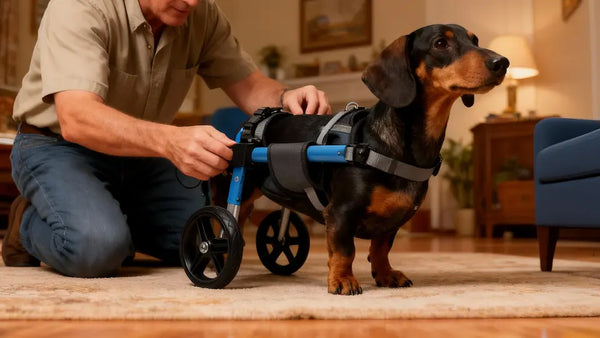
When you're considering a mobility wheelchair for your dog, it's natural to have questions about the everyday details. How will bathroom breaks work? Can they still play with their furry friends? What about naptime?
These aren't just practical concerns—they reflect your deep care for your pet's comfort, dignity, and happiness. Let's walk through what daily life typically looks like with a wheelchair, answering the questions that many pet parents ask when seeking mobility solutions.
Bathroom Breaks: Designed for Natural Use
One of the most common concerns we hear is: "Can my dog actually use the bathroom while wearing their wheelchair?"
The short answer: Yes, in most cases.
Your dog can generally pee and poop while in their wheelchair with designed-in clearance to minimize mess. Our wheelchairs are thoughtfully designed with this in mind—the rear harness includes a reinforced channel that provides support and urinary direction, which is particularly helpful for male dogs.
What This Looks Like in Practice
-
Positioning matters: The wheelchair supports your dog in a natural standing position, allowing them to eliminate comfortably.
-
Easy cleanup: The open design is intended to let waste fall away cleanly, similar to a normal walk.
-
No frequent removal needed: You don't have to take your dog in and out of the wheelchair every time they need to go.
Tips for Successful Potty Time
-
Maintain your dog's regular bathroom schedule—consistency helps them feel confident.
-
During the first few days, stay close and offer encouragement with a calm, reassuring voice.
-
Choose familiar potty spots initially, so your dog feels comfortable in their new wheels.
-
Keep treats handy to reward successful bathroom breaks and build positive associations.
Remember, your dog may feel a bit uncertain during their first few bathroom breaks. That's a normal part of the learning curve. Most dogs quickly realize they can still take care of business naturally, and within a few days, it becomes routine.

Rest Time: When to Remove the Wheelchair
Here's an important rule for your dog's safety and comfort: Wheelchairs are for active use, not for unsupervised rest or sleep.
Why This Matters
Think of the wheelchair as athletic equipment—like running shoes for humans. It's excellent for movement and activity, but it should be removed when your dog is resting.
-
Safety first: An unattended dog in a wheelchair could get caught on furniture or become tangled.
-
Comfort: Dogs need to lie down and relax in their natural position.
-
Muscle health: Rest periods allow your dog's muscles to recover after activity.
Creating a Healthy Usage Schedule
-
Recommended daily use: Most dogs can safely use their wheelchair for 2-4 hours per day, broken into multiple sessions.
-
The 15-minute rule: Consider giving your dog a break after approximately every hour of use.
-
Starting out: When first introducing the wheelchair, begin with shorter sessions of 15-30 minutes, then gradually increase duration based on your dog's energy level.
Signs It's Time for a Break
Watch for these signals: slowing down, panting more than usual, or trying to lie down in the wheelchair. Always supervise your dog during wheelchair use, and never leave them unattended.

Playtime: Social Life and Connection
Will my dog still be able to play? In many cases, absolutely!
Playing with Other Dogs
Your dog can continue their social life and play with their canine friends. The wheelchair is designed to support these precious moments of connection.
What to expect:
-
Initial curiosity: Other dogs may be curious about the wheelchair at first.
-
Quick adaptation: Most dogs accept the wheelchair surprisingly fast.
-
Supervision is key: Always supervise play sessions and watch for signs that any dog is overwhelmed.
Activities Your Dog Can Enjoy
Yes to these activities:
-
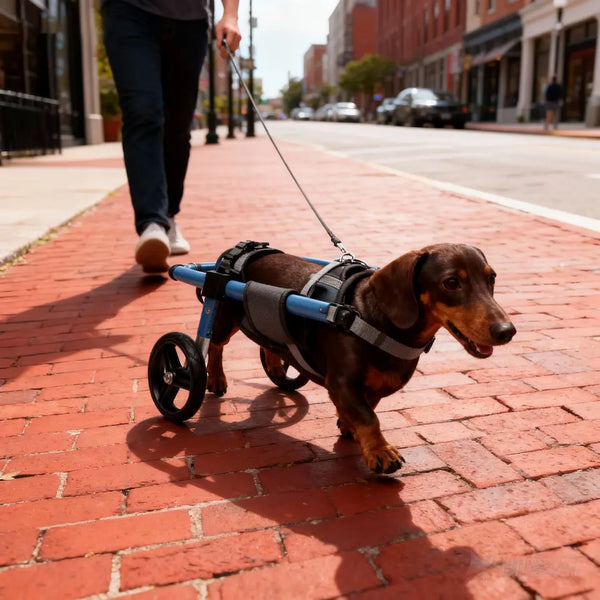
Walks in the neighborhood or park on smooth pavement.
-
Gentle play with toys (fetch with soft toys, tug-of-war).
-
Social time with other pets (with supervision).
- Short grass areas once your dog has mastered smoother surfaces.
Handle with care:
-
Rough terrain: While our wheelchairs can handle grass and some gravel, introduce these gradually. Start with smooth pavement, then progress to short grass after 3-5 days, and finally uneven surfaces after 1-2 weeks once your dog shows confidence.
-
Doorways: Your dog can fit through standard doorways, but they'll need time to learn spatial awareness with their wheels. Encourage and observe them as they master this skill.
Strictly avoid for safety:
-
Stairs: Your dog cannot safely use stairs while in the wheelchair. Remove it and assist them when stairs are necessary.
-
Bodies of water: Never let your dog enter pools, lakes, or streams while wearing the wheelchair. The wheelchair is too heavy for swimming, and currents could cause tipping.

The Bigger Picture: Supporting Quality of Life
Will using a wheelchair weaken my dog's muscles?
When used properly as part of a balanced routine, a wheelchair typically helps support muscle maintenance and overall health. The wheelchair supports mobility while allowing your dog to continue using their functional legs.
Regular movement promotes:
-
Muscle tone in working limbs.
-
Healthy circulation and mental stimulation.
Note: For best results, combine wheelchair use with professional veterinary advice.
What about their happiness?
When dogs regain mobility, pet owners often report seeing a renewed excitement and re-engagement with family activities. Your dog doesn't see themselves as "different"—they simply want to move and be part of the family. The wheelchair helps make that possible.

Getting Started with Confidence
Life with wheels can be surprisingly normal and fulfilling. Remember:
-
Bathroom breaks can happen naturally.
-
Supervised rest is essential.
-
Proper fit is key—visit our Get the Perfect Fit: Measuring Guide for instructions.
Within days, you and your dog can develop a rhythm. Every dog deserves to move with dignity. We invite you to consult with your veterinarian to explore if a mobility solution is right for your pet's specific needs.
You're Not Alone in This Journey
Making the decision to get a wheelchair for your dog often comes during an emotionally difficult time. You're watching your beloved companion struggle, and you want to help—but you also have very real, practical concerns about how this will actually work in day-to-day life.
Those concerns are valid and important. Understanding the realities of bathroom breaks, rest times, and play helps you make an informed decision that's right for both you and your dog.
What we've seen time and time again is this: The logistical concerns that seem daunting before getting a wheelchair quickly become routine. Within days, you and your dog develop a rhythm. The wheelchair becomes simply part of your daily life together—not a burden, but a tool that gives back joy, mobility, and precious time.
Every dog deserves to move with dignity and joy. If you're considering a wheelchair for your pet, we invite you to consult with your veterinarian and explore whether this mobility solution could restore the quality of life you both deserve.