*This article is for informational purposes only and does not constitute veterinary advice. Always consult your veterinarian regarding your dog's specific health needs.
Dachshunds are one of the longest-lived dog breeds. Across multiple studies, standard Dachshunds have a median lifespan of around 13.2 years, while Miniature Dachshunds typically reach approximately 14 years — figures that compare favourably to the overall average for purebred dogs. Some Dachshunds live well into their late teens.
That longevity is one of the things Dachshund owners love most about the breed. It also means that understanding how this breed ages — and what health considerations are most relevant at each stage — is genuinely useful knowledge for the long road ahead.
This guide covers the Dachshund lifespan from puppy to senior, with a focus on the mobility-related changes that are most relevant to owners of this breed.
Dachshund Lifespan at a Glance
A Wikipedia Dachshund found a life expectancy of 13.2 years for standard Dachshunds and approximately 14 years for Miniature Dachshunds, placing the breed consistently among the longer-lived dogs.
|
Type |
Typical Lifespan |
Senior Stage Begins |
|
Standard Dachshund |
12–15 years |
Around age 8–9 |
|
Miniature Dachshund |
13–16 years |
Around age 9–10 |
|
Kaninchen (Rabbit) Dachshund |
13–16 years |
Around age 9–10 |
Individual lifespans vary based on genetics, weight management, exercise, and veterinary care. The number one cause of death for Dachshunds is old age rather than a specific disease — a reflection of the breed's general resilience.
Life Stages: What to Expect at Each Phase
Puppy (0–1 year)
Dachshund puppies are energetic, curious, and surprisingly bold given their size. The primary considerations during this stage are establishing healthy movement habits early.
Because of their long spines and short legs, Dachshund puppies benefit from controlled exercise rather than high-impact activity. Jumping on and off furniture, navigating steep stairs repeatedly, and rough play with much larger dogs puts disproportionate strain on a still-developing spine. Ramps and steps designed for small dogs are a practical investment from puppyhood onward.
Young Adult (1–3 years)
The young adult Dachshund is typically at peak physical condition. This is the stage when their distinctive personality is fully established — curious, determined, and often somewhat single-minded in pursuit of interesting scents.
Weight management becomes relevant from this stage onward. Dachshunds are predisposed to obesity because of their small size and the need to restrict some forms of high-impact exercise, and excess weight puts additional strain on their spine and joints. Maintaining a healthy body weight throughout adulthood is one of the most practical things an owner can do to support long-term mobility.
Mature Adult (4–7 years)
The mature adult Dachshund remains active and engaged. This is the phase when routine veterinary checks become particularly valuable — not because problems are inevitable, but because early detection of any changes in spinal health, joint function, or weight is far more straightforward to manage than later-stage issues.
Regular exercise continues to be important. A minimum of 30 to 60 minutes of exercise per day helps keep Dachshunds fit and supports the core and back muscles that protect their spine. The type of exercise matters as much as the amount — low-impact walking and swimming are generally preferable to activities involving a lot of jumping or sudden direction changes.
Senior (8 years onward)
Most Dachshunds enter their senior years between ages 8 and 10. Many remain active, playful, and healthy well into their teens — aging in this breed tends to be gradual, particularly when they are kept at a healthy weight and supported with appropriate care.
The changes most commonly observed in senior Dachshunds include reduced stamina on walks, a preference for softer resting surfaces, some stiffness after periods of rest, and — in some cases — changes in hind leg coordination. Regular veterinary check-ups at this stage allow any changes to be assessed and managed appropriately.
The Mobility Health Risk Most Relevant to This Breed
Dachshunds have one specific health consideration that is more relevant to this breed than almost any other: the relationship between their distinctive body shape and spinal health.
The number one health issue in Dachshunds is back ailments, directly related to their long spine, short and muscular legs, and low-to-the-ground stature. This is a structural characteristic of the breed, not a defect — it's the same physical trait that made them effective burrowing hunters. But it does mean that spinal health warrants particular attention throughout a Dachshund's life.
Intervertebral disc disease (IVDD) is caused by a bulging or slipped disc in the Dachshund's spine, and around 25% of Dachshunds develop this issue at some point in their life.
IVDD can occur at any age, but is most commonly seen in middle-aged to mature Dachshunds. The severity varies considerably — some dogs experience mild back stiffness that responds well to rest and veterinary management, while others experience more significant changes in mobility. Your veterinarian is the right person to assess any changes in your dog's movement and advise on the most appropriate response for your dog's specific situation.
Signs worth discussing with your vet
The following observations are worth raising with your veterinarian promptly, as early assessment is generally more straightforward than later management:
- Reluctance to jump up or down from surfaces they previously used comfortably
- Changes in how your dog climbs stairs or navigates steps
- Stiffness or an arched back posture, particularly after rest
- Any changes in hind leg coordination or gait
- Sensitivity when the back is touched
This list is informational only. Any concerns about your dog's mobility should be assessed by a veterinarian, who can determine the appropriate next steps for your individual dog.
Practical Steps That Support Mobility Throughout a Dachshund's Life
These are practical, everyday considerations rather than medical interventions — the kind of habit-based adjustments that make a meaningful difference over time.
Manage weight consistently. For a breed where spinal load is a relevant consideration throughout life, keeping body weight within the healthy range for your dog's specific type and size is one of the most actionable things an owner can do. Your veterinarian can advise on the appropriate weight range for your individual dog.
Use ramps and steps. Repeated jumping on and off sofas, beds, and car seats creates cumulative impact on the Dachshund spine. Dog ramps and steps are widely available and reduce this impact significantly. Many Dachshund owners find that dogs adapt to using a ramp quickly when introduced with positive reinforcement.
Support low-impact exercise. Regular movement that doesn't involve jumping or high-impact activity supports the muscle tone that helps protect the spine. Walking on varied terrain, gentle play, and — where possible — swimming are all well-suited to this breed.
Make resting surfaces supportive. Orthopedic or memory foam dog beds that provide even support across the length of the body suit Dachshunds well, particularly from middle age onward.
Keep up with routine veterinary check-ups. Annual checks through adulthood and more frequent visits in the senior years allow any changes in spinal health, weight, or mobility to be caught and addressed early.
When Mobility Support Becomes Relevant
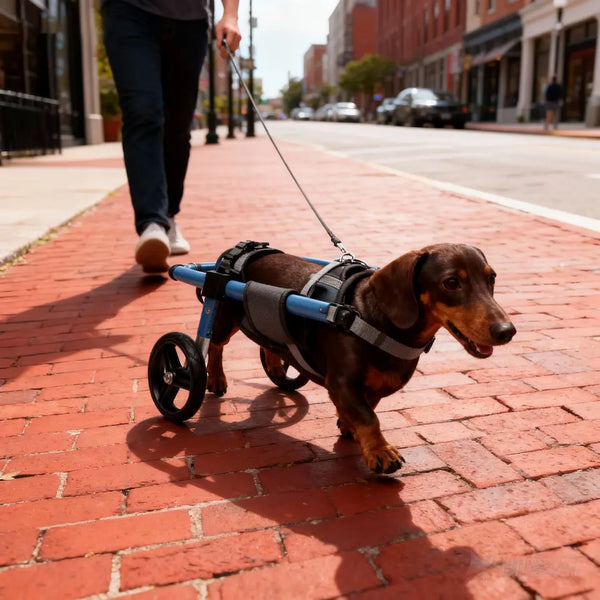
For Dachshunds who do experience significant changes in hind leg mobility — whether due to spinal issues, age-related changes, or other factors assessed by a veterinarian — mobility support aids are one of the practical options owners often explore.
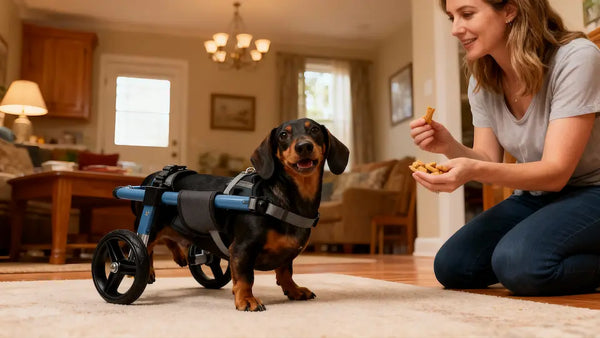
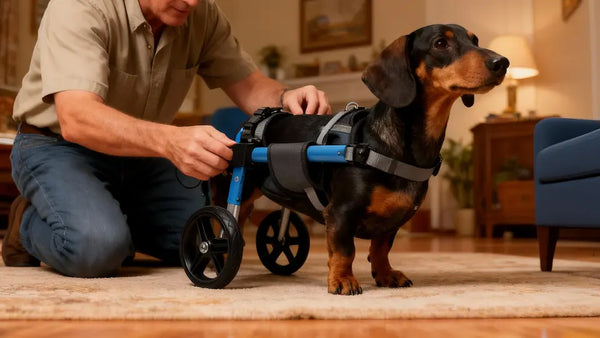
Rear-support wheelchairs are commonly used by Dachshunds whose hind leg function has been significantly reduced, allowing them to continue moving independently, going outdoors, and engaging with daily life. Because of their long barrel-chested body, Dachshunds require a specific wheelchair configuration rather than a standard small-dog size — something covered in more detail in our Dachshund Wheelchair Guide.
As always, the right approach for any individual dog depends on veterinary assessment and the specific nature of the mobility change involved.
Frequently Asked Questions
Q: What is the average lifespan of a Dachshund?
Most Dachshunds live between 12 and 16 years. A 2024 UK study found median lifespans of 13.2 years for standard Dachshunds and approximately 14 years for Miniature Dachshunds. Individual lifespan depends on genetics, weight, exercise, and veterinary care.
Q: At what age is a Dachshund considered a senior?
Most Dachshunds are considered seniors from around 8 to 10 years old, depending on their size and overall health. Many remain active and healthy well beyond this point.
Q: Are all Dachshunds prone to back problems?
Around 25% of Dachshunds develop IVDD at some point in their life, making it the single most relevant health consideration for the breed. Not all Dachshunds will experience significant spinal issues, and the severity varies considerably among those that do.
Q: What type of exercise is best for a Dachshund?
Low-impact exercise that supports muscle tone without placing excessive strain on the spine — walking, gentle play, and swimming — suits Dachshunds well throughout their life. High-impact activity involving repeated jumping is generally worth limiting, particularly as dogs get older.
Q: Can an older Dachshund still live a full and active life?
Yes. Many Dachshunds remain genuinely active, engaged, and healthy into their early to mid teens. The senior years in this breed tend to be gradual rather than a sudden shift, particularly in dogs that have been well-supported with appropriate weight management and regular veterinary care.
Summary
Dachshunds are long-lived, resilient dogs with distinctive physical characteristics that reward informed ownership. Their longevity means you're likely to have many years together — and understanding how their body changes across life stages, and what mobility considerations are most relevant to the breed, is simply useful knowledge for that journey.
For breed-specific wheelchair guidance, see our Dachshund Wheelchair Guide. For general wheelchair fitting information, visit our Measuring Guide.